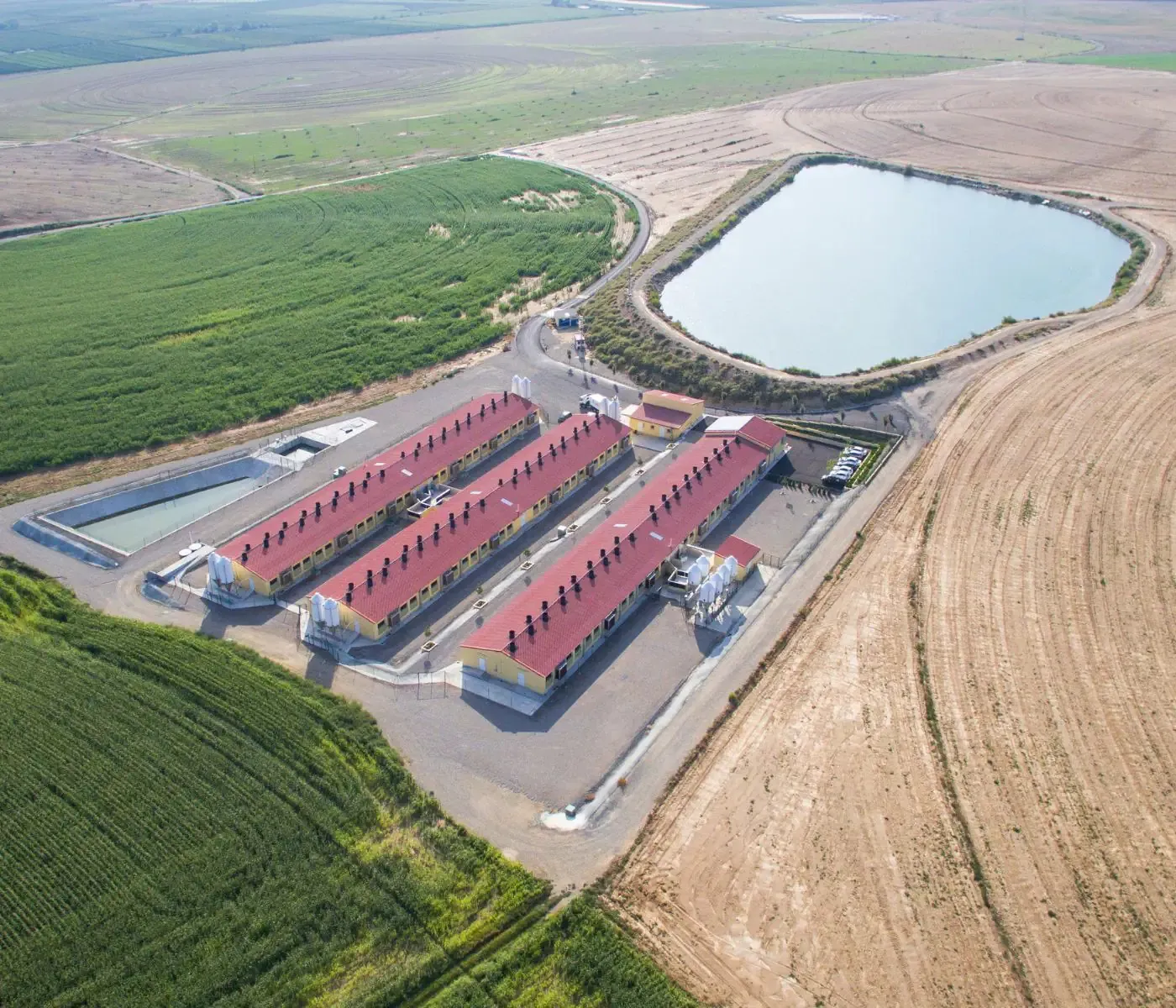
The environment in your livestock buildings, monitored in real time
Temperature, humidity, CO2 and ammonia in your barns. Alerts when something goes out of range and automatic welfare reports. Without having to keep watch all day.
Do you recognise any of these problems?
The most common on livestock farms without automated environmental monitoring.
You find out about problems when the animals have already suffered them
A heat spike, an ammonia build-up or a rise in CO2 goes unnoticed until you see the effects on the animals' health.
You rely on checking your facilities by eye
You go to the barn to check everything is fine, but the critical episodes that do the most damage can happen in the hours when you're not there.
You have no record of environmental conditions
When there is a health or production problem, you can't tell whether the environment played a part. Without a continuous record, the cause goes unidentified.
Environmental monitoring designed for livestock farms
Sensors in your barns connected to a platform that alerts you when a parameter crosses its threshold and keeps the full history. The weekly or monthly report generates itself.
What changes on your farm
Alerts before the animals suffer
Set thresholds by type of livestock. If anything goes out of range, you get an instant alert on your phone.
Full environmental history with no manual work
Every reading is recorded automatically. After an outbreak or a drop in production, check what happened in the days before.
Automatic reports for traceability and certification
Generate regular reports on the environmental conditions in your facilities. Useful for animal welfare audits, certifications and communication with vets.
Flexibility to install what you need
Start with the sensor you're most concerned about: temperature and humidity, CO2 or NH3. Expand the network when you see the value, without changing your infrastructure.
How livestock farmers like you use it
Three real situations where environmental monitoring changed the response to a problem.
Pig barn: NH3 spike in summer
An NH3 sensor detected an out-of-range build-up at 3 am. The alert reached the farmer's phone before the animals showed any symptoms. Extra ventilation was opened straight away.
Zero animal losses. Without monitoring, the episode would have gone unnoticed until the morning check.
Poultry: temperature control during rearing
Chickens in the rearing phase are extremely sensitive to temperature changes. With AgroMind, the producer set up temperature alerts with different ranges for each week of age. The system detected a heating failure during the night.
Intervention in under 30 minutes. That batch had the lowest mortality rate of the season.
Animal welfare audit
The cooperative required a record of environmental conditions for the last 12 months as a certification requirement. With AgroMind, the farmer exported the full report in minutes without having to prepare anything by hand.
Certification passed with no extra reporting work. The traceability had built itself throughout the year.
Want to see how it would look in your facilities?
Tell us your type of livestock, number of barns and the problem that worries you most. We'll show you what the system would look like in under 15 minutes.
Tell us your type of livestock,
barns and the parameter that worries you most
We'll reply in under 24 hours with a clear proposal and a demo tailored to your facilities. No commitment.