Agriculture
Electrical conductivity sensor
Monitors salinity and salt concentration in the soil. Key for precise fertigation and avoiding salt stress.
- Arrives pre-configured
- No building work, no plugs
From €450
I want it!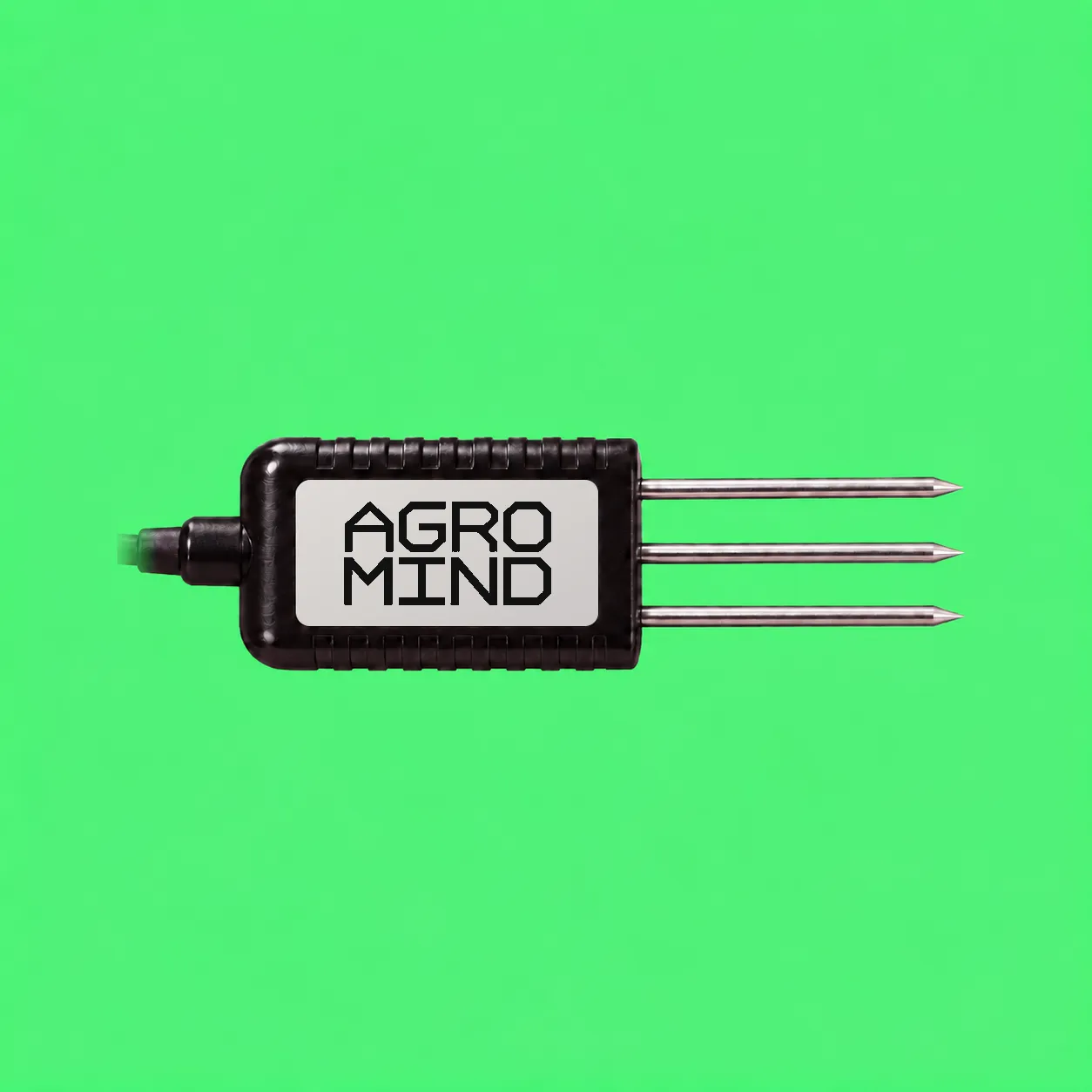
What it measures
Measures electrical conductivity, which is related to dissolved salts. Used to detect salinity or salt build-up from irrigation/fertigation, adjust leaching strategies, and understand nutrient uptake blockages and osmotic stress.
How it works
The sensor measures soil electrical conductivity, which increases with the concentration of dissolved salts. It lets you monitor salinity in real time and make management decisions.
What you gain
- Fine-tune fertigation
- Prevent salinisation
- Optimise leaching irrigations
Installation
You install it yourself, with no building work and nothing to set up
The sensor arrives pre-configured from the factory. No trenches, no power supply and nothing to connect to the internet: you place it, fix it and it starts sending data.
Step by step
- 1
Pick the spot
In the active root zone, where the fertigation water reaches.
- 2
Dig a small hole
Dig down to the depth of the roots you want to watch.
- 3
Push in the sensor
Push it fully into the side of the hole, into undisturbed soil.
- 4
Backfill and tidy the cable
Fill the hole, pressing the soil down, and tie the cable to a stake or post with a cable tie.
That's it. From then on, readings reach the AgroMind app on their own.
What you'll see in the app
Readings reach AgroMind on their own. This is what you'll be able to follow:
Electrical conductivity (EC)
Value in dS/m or mS/cm
Sustained increases
Possible salt accumulation
Spikes after fertigation
Normal if it later stabilises
Compare zones
Detect problematic sectors
Where you'll get the most out of it
Greenhouses and intensive vegetables
Precise fertigation and salinity control
Areas with hard or saline water
Early detection of salt build-up
Plots with salinisation history
Continuous monitoring and leaching adjustments
How the data reaches your phone
The sensor works together with a module that collects and sends the readings.
- 01
The sensor
Measures continuously at the spot where you placed it.
- 02
AgroSense module
Collects readings from up to 6 sensors and sends them even where there is no Wi-Fi or 4G/5G coverage.
- 03
AgroMind app
Follow the trend from your phone, and we alert you on WhatsApp when something is out of the ordinary.
Technical sheet
- Protection
- Resistant to field conditions and salts
- Setup
- Pre-configured from the factory
- Mounting
- Cable tie
- Connection
- AgroSense module, up to 6 sensors per module
- Coverage
- Works without Wi-Fi or 4G/5G coverage
- Alerts
- WhatsApp alerts and AgroMind app
- Origin
- Made in Spain
- Warranty
- 2-year warranty
Frequently asked questions
What exactly does it measure?
The amount of salts dissolved in the soil water, including both salts from irrigation water and fertilisers. It's the best signal for monitoring salinity and fertigation.
How do I know if there's too much salt?
It depends on the crop and soil, but above 2–3 dS/m sensitive crops start to suffer, and above 4–6 dS/m most crops do. Rather than a single value, watch whether the trend keeps rising irrigation after irrigation.
Is it normal for it to rise after fertigation?
Yes, fertilisers are salts. What matters is that it then levels off rather than climbing endlessly; if salts build up, it's time for a leaching irrigation.
Does it replace a lab analysis?
No, it complements it. A lab analysis gives you a detailed snapshot at one moment; the sensor shows you the day-to-day trend so you know when to act.
Is it affected by soil moisture?
Yes, the reading depends on how much water there is. That's why it's best combined with a moisture sensor, comparing readings at similar moments, for example after each irrigation.
Do I have to set anything up to get started?
No. It arrives pre-configured from the factory: you place it, fix it with a cable tie or its wall bracket, and readings start reaching the AgroMind app on their own.
More sensors in agriculture
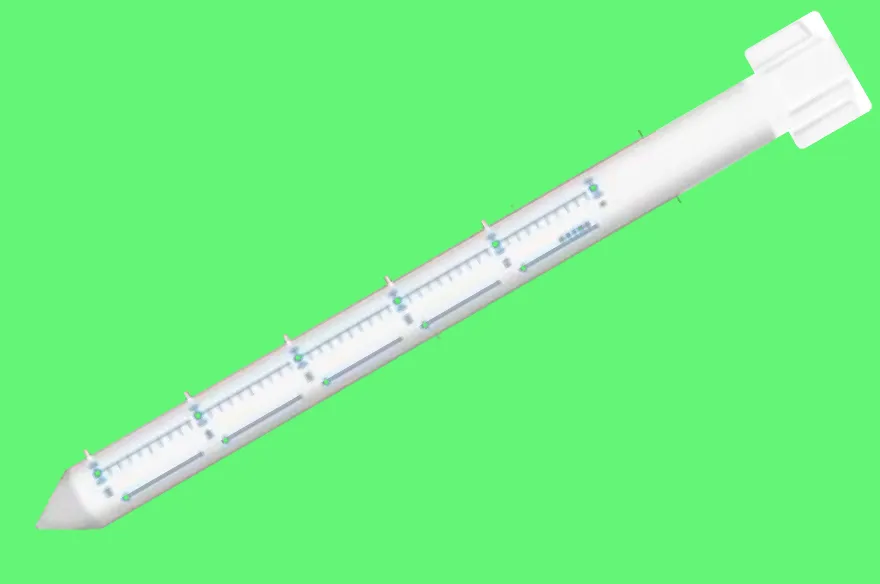
Multi-level capacitive soil moisture sensor
Measures volumetric soil moisture at several depths to show how water moves through the entire root profile.
View details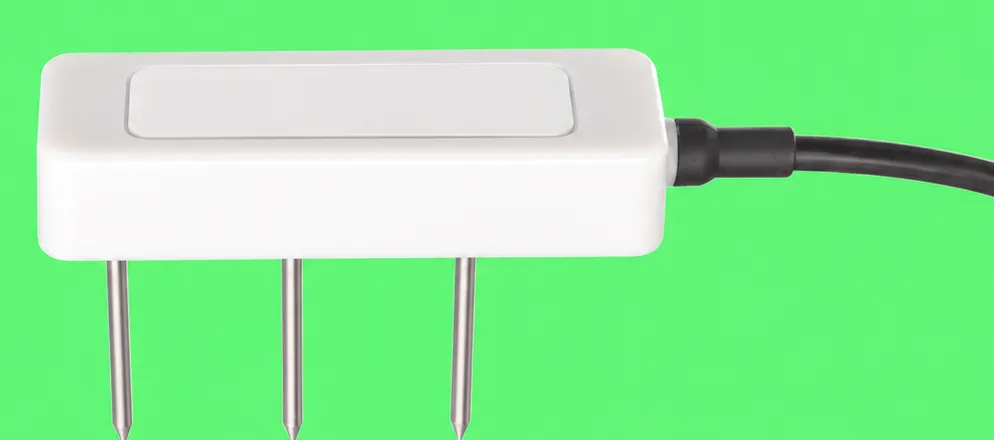
Single-level capacitive soil moisture sensor
Measures volumetric moisture at one specific depth for simple and precise irrigation control.
View details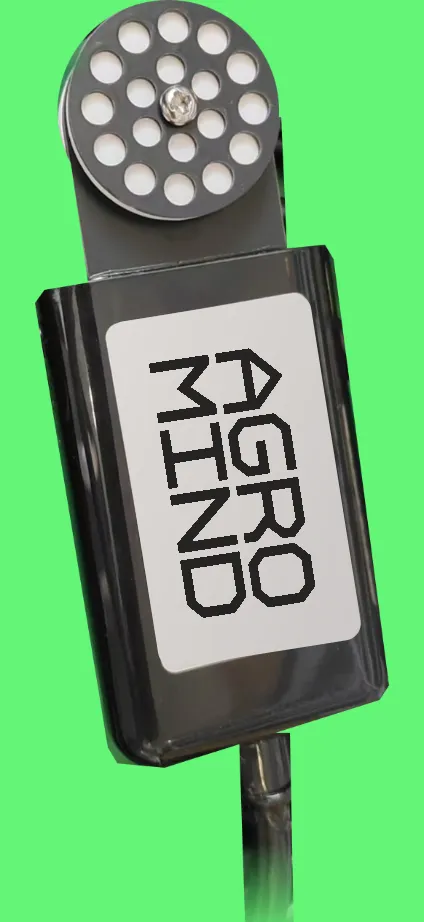
Tensiometer (matric potential)
Measures matric potential: the effort the plant has to make to extract water from the soil.
View details Measure your soil,
irrigate with data
Tell us your crop, how many hectares you have and how you irrigate. We'll tell you how many sensors you need and where to place them so readings represent the whole plot.