
Agriculture
Tensiometer (matric potential)
Measures matric potential: the effort the plant has to make to extract water from the soil.
- Arrives pre-configured
- No building work, no plugs
From €750
I want it!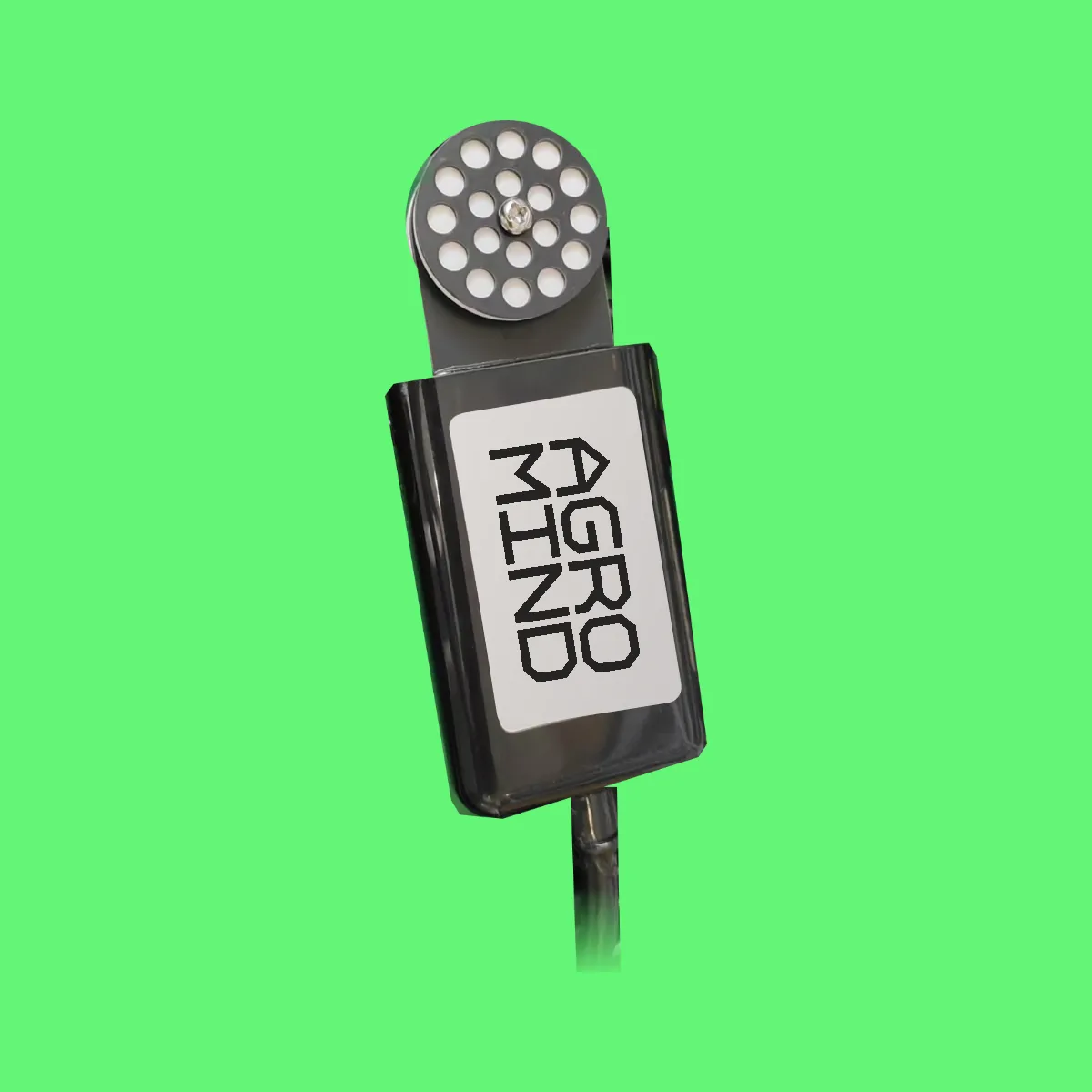
What it measures
Measures matric potential (the soil water “tension”). It’s literally the effort the plant makes to extract water: higher tension means it’s harder to drink.
How it works
A tensiometer uses a system that reflects the suction required to extract water from the soil. It’s very useful to decide the exact irrigation moment.
What you gain
- Very agronomic: speaks the plant’s language (stress)
- Makes simple, effective irrigation rules easier
- Ideal for regulated deficit irrigation strategies
Installation
You install it yourself, with no building work and nothing to set up
The sensor arrives pre-configured from the factory. No trenches, no power supply and nothing to connect to the internet: you place it, fix it and it starts sending data.
Step by step
- 1
Pick the spot
In the root zone, inside the wet bulb formed by the dripper.
- 2
Make the hole
Dig down to the root depth you want to watch, usually between 20 and 40 cm.
- 3
Set it in mud
Mix soil from the hole with water to make mud, pour it in and insert the sensor. That way no air pockets remain.
- 4
Backfill and tidy the cable
Fill with soil, press gently and tie the cable to a stake or post with a cable tie.
That's it. From then on, readings reach the AgroMind app on their own.
What you'll see in the app
Readings reach AgroMind on their own. This is what you'll be able to follow:
Low tension
Soil water available → you can space irrigations
High tension
Stress risk → it’s time to irrigate
Crop thresholds
Defined by crop and phenological stage
Where you'll get the most out of it
Vineyards with regulated deficit irrigation
Precise control of water stress by phenological stage
High-quality fruit trees
Optimise irrigation timing and amount
Stress-sensitive crops
Early detection of water shortage
How the data reaches your phone
The sensor works together with a module that collects and sends the readings.
- 01
The sensor
Measures continuously at the spot where you placed it.
- 02
AgroSense module
Collects readings from up to 6 sensors and sends them even where there is no Wi-Fi or 4G/5G coverage.
- 03
AgroMind app
Follow the trend from your phone, and we alert you on WhatsApp when something is out of the ordinary.
Technical sheet
- Protection
- Rugged construction resistant to field conditions
- Setup
- Pre-configured from the factory
- Mounting
- Cable tie
- Connection
- AgroSense module, up to 6 sensors per module
- Coverage
- Works without Wi-Fi or 4G/5G coverage
- Alerts
- WhatsApp alerts and AgroMind app
- Origin
- Made in Spain
- Warranty
- 2-year warranty
Frequently asked questions
How is it different from a moisture sensor?
A moisture sensor tells you how much water is in the soil; a tensiometer tells you how hard the plant has to work to get it. That's why its reading means the same in sandy soil as in clay.
How do I read the values?
The higher the reading, the drier the soil and the harder the plant is working. You set a threshold at which it's time to irrigate, and we help you adjust it for each crop and growth stage.
Is it suitable for regulated deficit irrigation?
Yes, it's its star use. In vineyards, almond or olive groves it lets you keep a moderate, controlled stress in the stages where it pays off, without overdoing it.
Does it work with drip and sprinkler irrigation?
Yes, with any system. The key is placing it inside the area the irrigation wets: with drip, in the dripper's wet bulb.
Does it need maintenance?
Very little. Just check from time to time that it's still well seated, especially after tilling or running machinery nearby.
Can I connect several sensors to the same module?
Yes. One AgroSense module takes up to 6 sensors, so you can combine different types at the same spot and expand later without buying another unit.
More sensors in agriculture
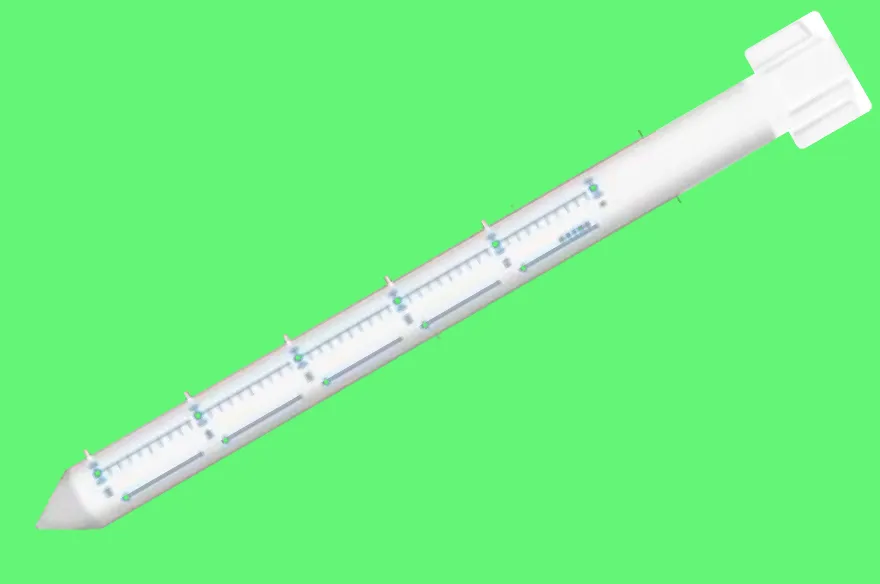
Multi-level capacitive soil moisture sensor
Measures volumetric soil moisture at several depths to show how water moves through the entire root profile.
View details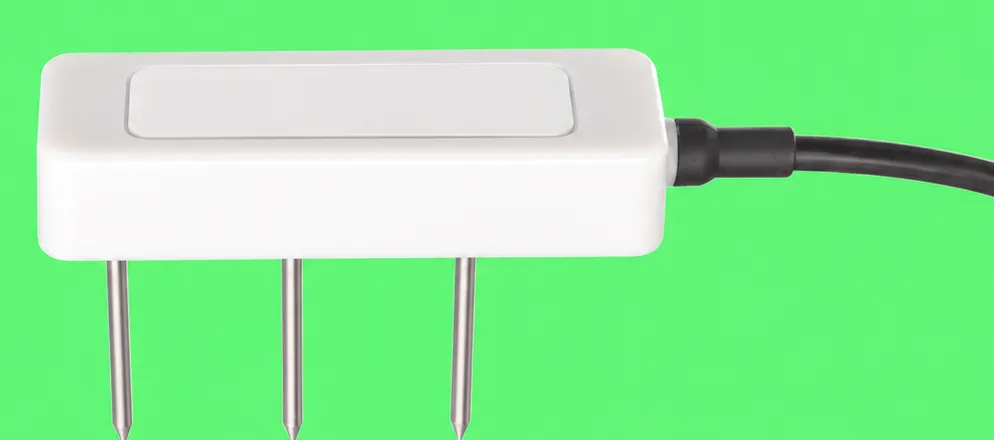
Single-level capacitive soil moisture sensor
Measures volumetric moisture at one specific depth for simple and precise irrigation control.
View details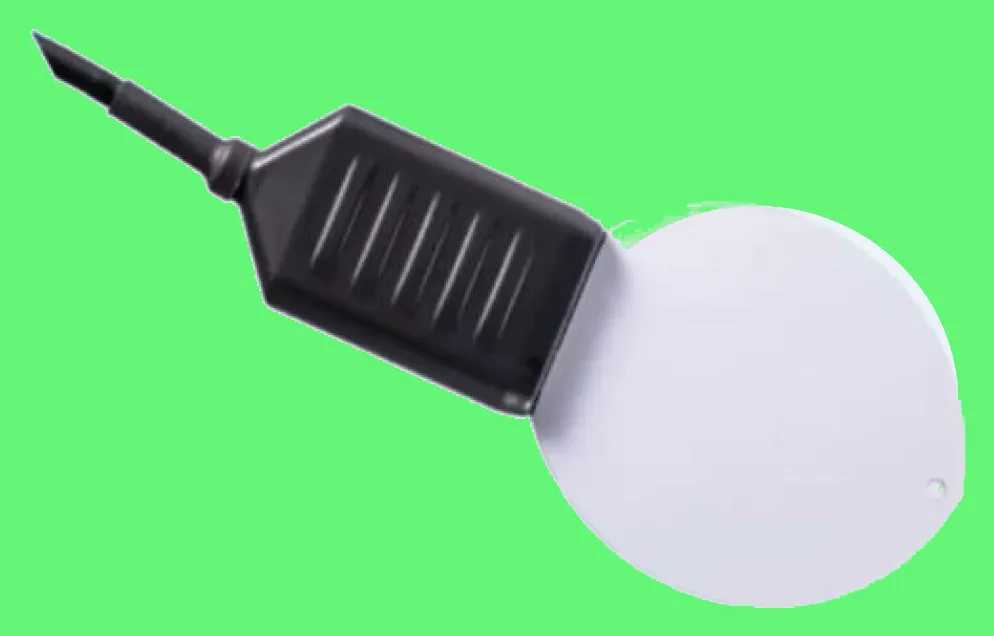
Leaf wetness sensor
Detects leaf wetness hours and fungal risk. Key to anticipating fungal disease risk and optimising treatments.
View details Measure your soil,
irrigate with data
Tell us your crop, how many hectares you have and how you irrigate. We'll tell you how many sensors you need and where to place them so readings represent the whole plot.